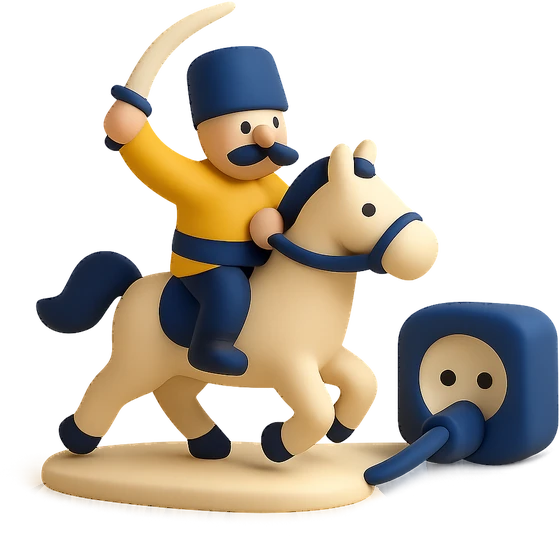
🤖 Literally, in English
“A guest into the house — God into the house.”
Гість у хату — Бог у хату. Hist u khatu — Boh u khatu

🤨 What does it ACTUALLY mean? →
🇬🇧 What you'd actually say
“Guests are always welcome here.”
also: “A guest is a blessing.” · “Come in, you're always welcome.”
- 📖 Meaning
- A guest is a blessing and must be received warmly.
- 💡 Why it's funny
- It is not funny — it is the single best short explanation of why a Ukrainian host will not let you leave without eating.
- 🧭 Closest English idiom
- No direct English equivalent. English has 'mi casa es su casa' borrowed from Spanish, and 'make yourself at home', but nothing native that treats the arrival of a guest as a sacred event. This is a genuinely culture-specific saying.
- 📝 Explanation
- Said sincerely while opening the door and immediately putting food on the table.
- 🏛 Cultural context
- Hospitality has a strong ritual weight in Ukrainian culture; refusing to feed a guest is close to a moral failure.
🧠 Learn
- hospitality (noun) — friendly and generous treatment of guests — гостинність “Thank you for your hospitality.”
- make yourself at home (phrase) — said to a guest to tell them to relax — почувайтеся як удома “Come in, make yourself at home.”
🗣 In context
Заходь, сідай! Гість у хату — Бог у хату.
Come in, sit down! Guests are always welcome here.
🎧 Hear the contrast
dontpushthehorses.xyz