🤖 Literally, in English
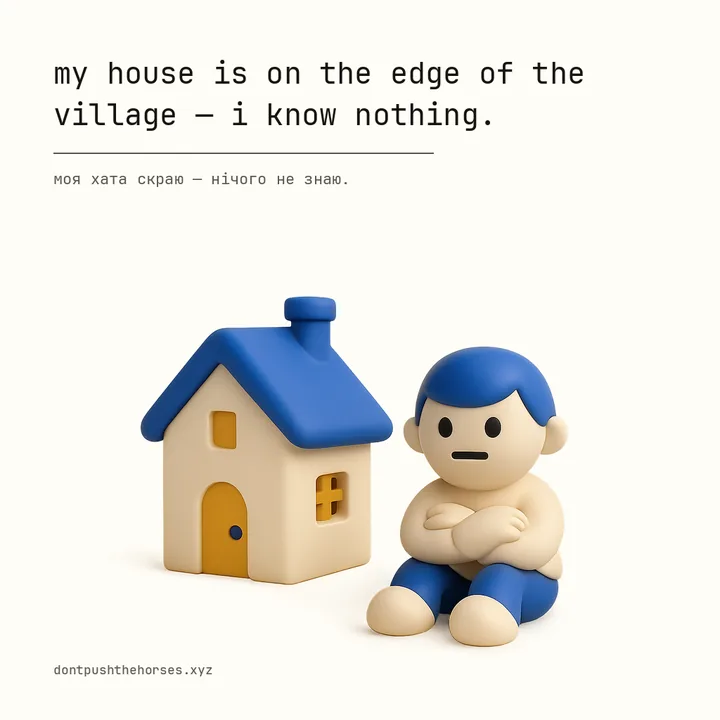
“My house is on the edge of the village — I know nothing.”
Моя хата скраю — нічого не знаю. Moya khata skrayu — nichoho ne znayu
🤨 What does it ACTUALLY mean? →
🇬🇧 What you'd actually say
“Not my problem.”
also: “I'm staying out of it.” · “Don't drag me into this.”
- 📖 Meaning
- A refusal to get involved in someone else's problem.
- 💡 Why it's funny
- The geography is doing all the moral work: the house is at the edge of the village, therefore the speaker cannot possibly know what happened.
- 🧭 Closest English idiom
- “It's not my circus, not my monkeys.”
- 📝 Explanation
- Usually said critically about someone else's indifference; saying it about yourself is close to admitting cowardice.
- 🏛 Cultural context
- In a traditional village the house at the far end was genuinely the last to hear any news — which is exactly why the excuse is so convenient.
🧠 Learn
- stay out of it (phrase) — to avoid getting involved — не втручатися “I'm staying out of this argument.”
- indifference (noun) — a lack of interest or care — байдужість “Their indifference was shocking.”
🗣 In context
Усі мовчали — моя хата скраю, нічого не знаю.
Everyone kept quiet — not my problem, apparently.
🎧 Hear the contrast
dontpushthehorses.xyz